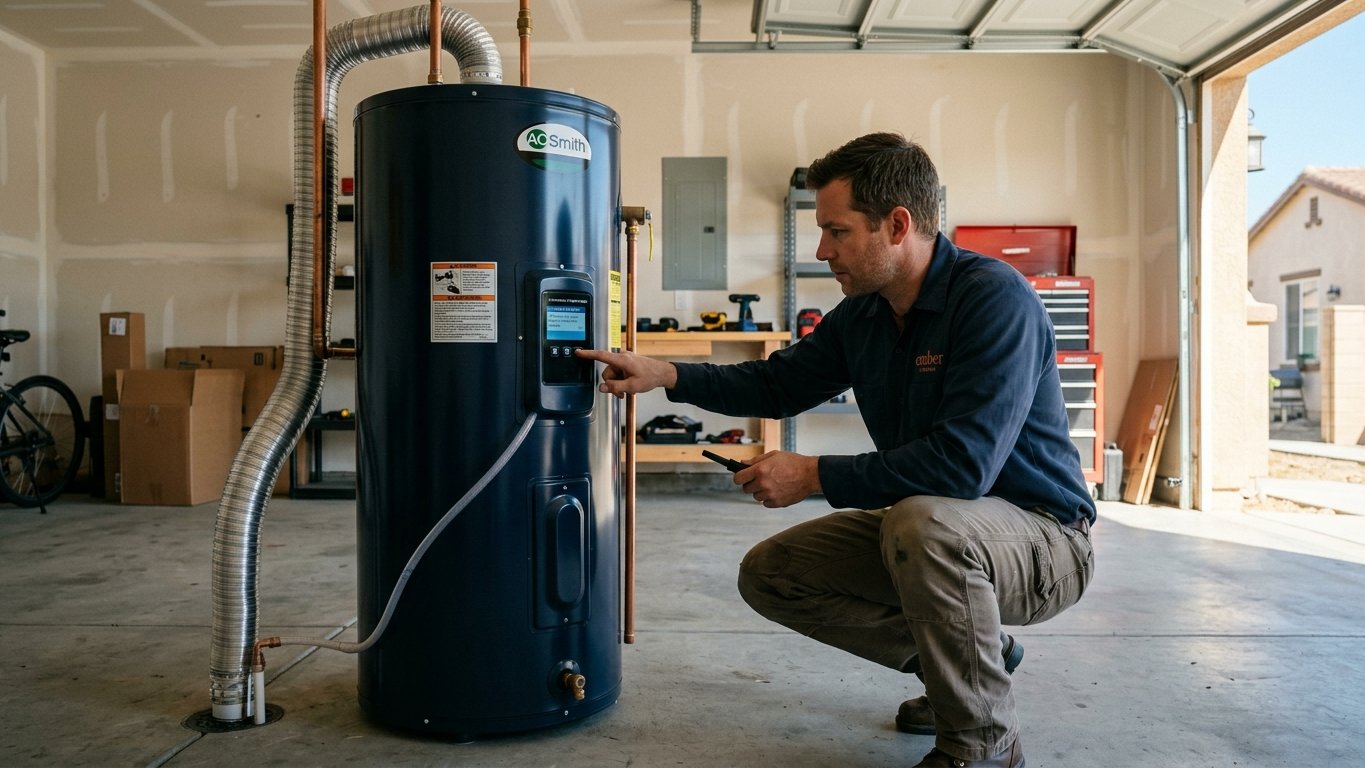
Why San Diego is a strong heat pump market
Heat pump units work best with steady, mild surrounding air and room to breathe — typically a garage with at least 1,000 cubic feet of space, per the DOE's heat pump water heater guidance. San Diego garages rarely freeze and rarely bake, which keeps the units in their efficient operating range most of the year. A sealed interior closet, by contrast, starves them.
Incentives change the math
California's electrification push has put real money behind gas-to-heat-pump conversions through state incentive programs and federal tax credits, on top of utility rebates that come and go. Several companies in this guide advertise incentive handling as part of the install. Ask the installer to put the expected incentive amount and who files for it in the quote — programs have budgets and change without much notice.
What the install actually involves
Swapping gas for a heat pump unit usually means a dedicated 240V circuit, sometimes panel work, plus condensate routing — the units dehumidify as they run. They are taller than the tanks they replace, so clearance matters. Expect a site visit covering panel capacity, garage volume, and drain options before a credible quote.
- Electrical. Dedicated 240V circuit; possible panel upgrade on older homes
- Space. Roughly 1,000 cu ft of air volume; garages are ideal
- Condensate. A drain path for the water the unit pulls from the air
- Noise. A running compressor — fine in a garage, noticeable in a hallway closet